Posts

The first bumblebee of the year

Image
My first 2022 bumblebee (6th March 2022) The huge buff-tailed bumblebee queens are out of hibernation ready to start making their nests in time for all the spring flowers to come out. A rather appropriate anniversary gift for my Graham and I! The large queen bumblebees start flying on sunny days in early spring (some are  winter-active ). They are searching for food high in energy (nectar) and protein (pollen). You can see the neat-packed pollen baskets on bumblebee's hind legs and nectar is stored in their crop (similar to where birds store food). Sometimes the colour of the pollen can suggest what plant a bee has been visiting; I occasionally notice bumblebees with striped pollen baskets from visiting different flowers (see photo below).  Bumblebee with two types of pollen on hind leg Once fed, the bumblebee will be seen low flying (zig-zagging pattern) across habitats like grass verges, near compost heaps, and other habitats which may provide possible nesting holes. Most UK...

Bilberry bumblebees again... my Natural History Live talk

Image
Now, a tad late but here is the recording of my FSC presentation on the Long Mynd Bilberry Bumblebee project.  There are more FSC BioLinks videos from these two playlists: Natural History Live and FSC Virtual Meet Ups . Please give it a watch to learn about this species and the great work of the volunteers.  I also have a post here  with some more detail on the project and bilberry bumblebees .

Bilberry bumblebees and the National Trust

Image
In my totally 'unbiased' view, these are the best UK  bumblebee  species.  Not only are they super fluffy like other bumblebees, they are adorably sized, and are found in one of my favourite habitat types;  upland heath. BB worker near Pumlumon (June 2018) I have only seen this species once and I was lucky enough to almost study their foraging behaviour for my MSc thesis.  Unfortunately due to the current situation (coronavirus again!) the MSc field work didn't happen.  However, I have just finished writing up the 2020 season report from volunteer data from Bumblebees on the Mynd so this is a perfect time to share this!  Here are some links to check out for these bumblebees and brain wash you all with their fluffiness.  I mean, look at their cute little red bums! Bumblebee Conservation Trust BWARS Steven Falk's Flickr BBCT Pollinating the Peak project by Rho Green at BBCT ( @BuzzingPeak ) Bumblebees on the Mynd National Trust project  @Bumbl...

February 2021 - finally time for bees (and spiders)

Image
Slightly more creatures are finally emerging.  The winter honeysuckle ( Lonicera fragrantissima ) in our garden was positively buzzing with bees this month.  We had buff-tailed bumblebees ( Bombus terrestris ) and early bumblebees ( B. pratorum ) on the flowers and I managed to catch this honeybee ( Apis mellifera ) really filling up with honeysuckle pollen.  It was fascinating to watch the honeybee combing the pollen into neat little balls to bring back to the hive for the larvae to eat. Buff-tailed bumblebee ( Bombus terrestris)  on honeysuckle 26th February 2021 Honeybee ( Apis mellifera ) on honeysuckle 26th February 2021 As bumblebees and honeybees are both social bee species they have worker bees which go out to forage for the hive/colony and maintain the nest.  Honeybee colonies are alive all year but workers won't be seen out in winter and they will instead use the food resources like honey they produced during the warmer months.   In...

January 2021 - earwig affection

Image
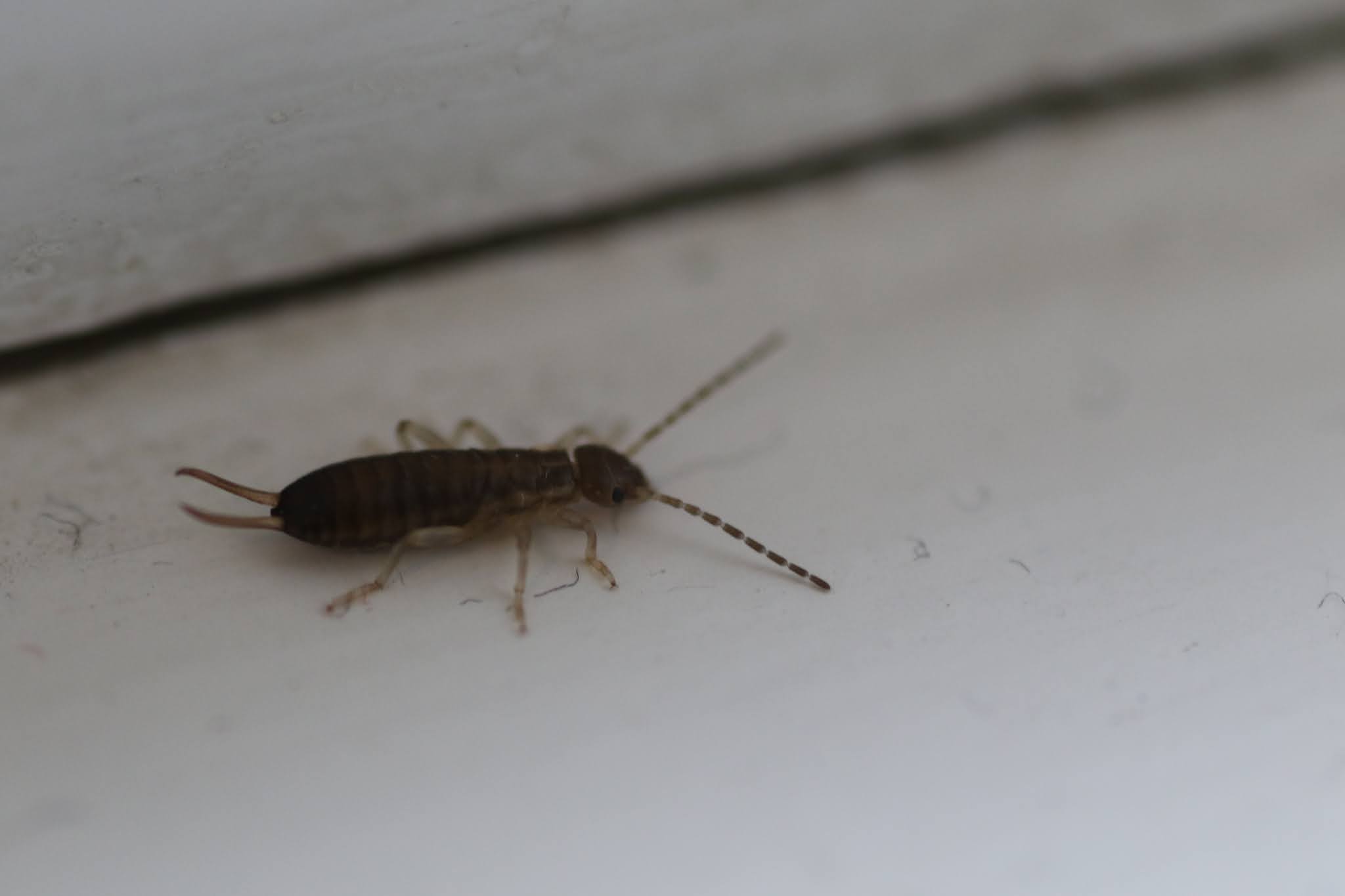
January 2021 sightings has been converted into an earwig affection post.  I was very busy submitting my MSc thesis until mid-January and didn't have much time to go bug hunting.  Pretty much the only insect I saw was this juvenile earwig. Juvenile earwig 31st Jan. 2021 ( Forficula auricularia ) Earwigs are in the Dermaptera (skin wings) and in the UK we have four native species. This little earwig (called a nymph not a larva) is a juvenile as there are no or very small wing cases visible - only adults have wings.  The name for earwig comes from the shape of their wings; they look like little ears.  These wings are a right faff for the insects to fold up again so they are not often seen in flight but  here  is a take-off video of an earwig.  Their wings fold out by spring-like folds to be 10 times bigger than the folded size and remain locked in place when not in use.  The wings are even used as models for some engineering projects . They have fili...